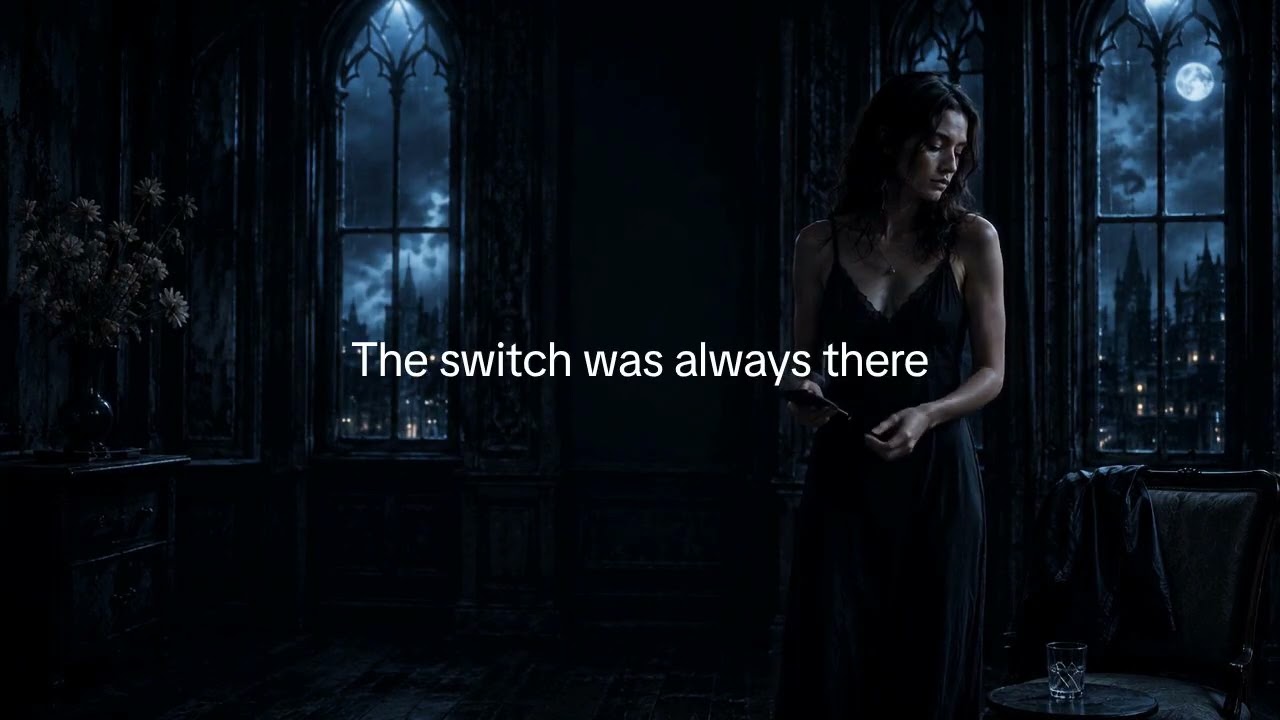
How Shakespeare’s Sonnet 129 became a Vesper Mourdant industrial-darkwave cycle of desire, regret and returning despite knowing the cost.
WRITING THE SONG
Morning arrives, but it does not make anything clearer.
A cup has gone cold. The other person has left. The room still holds the shape of what happened.
The narrator knows what she wanted, what it cost, and what she will promise herself never to do again.
She also knows how little that promise may change.
“I know the road.
I take it anyway.”
After the Act began with Shakespeare’s Sonnet 129.
The poem moves between the anticipation of desire, the intensity of pursuing it, and the disgust that can follow its fulfilment. Its final turn is especially uncomfortable: understanding that pattern does not necessarily teach anyone how to avoid it. Folger Shakespeare Library — Sonnet 129.
That gap between knowledge and action became the centre of the adaptation.
I did not want to write about someone who had been completely fooled. The more difficult character was someone who understood the situation, recognized the warning signs, and still returned.
That is why the music opens with:
“I know the road.
I take it anyway.”
Those two sentences remove the easiest explanation.
The narrator cannot simply say she did not know. She has been here before. Her problem is not a lack of information.
It is that knowing and wanting are not the same thing.
The title determined where the story should begin.
After the Act is not primarily interested in the glamorous part of temptation. It begins with what remains when the glamour has gone.
The first verse remembers the attraction, but the present-tense world is already colder:
“Now morning hums against the dirty glass
Your shape is gone; the air still keeps the mark.”
That image gave the piece somewhere physical to stand.
The other person is absent, but the room has not reset. There is still evidence of closeness, and that evidence makes the emptiness more noticeable.
Then comes the line:
“The light arrives. It does not clear the dark.”
Morning normally offers a convenient turning point. The night ends, the room becomes visible, and the character understands what happened.
Here, understanding is not the solution.
She can see clearly. She still does not know how to leave the pattern behind.
The central hook puts the two emotional states beside each other:
“Before the act, a heaven
After the act, a stain.”
That is the adaptation’s compressed version of the contrast that attracted me to Sonnet 129: what feels irresistible beforehand can become unbearable afterward. Shakespeare repeatedly shifts between pursuit, possession and retrospective judgment. Folger Shakespeare Library — Sonnet 129.
But the next two lines are what make the chorus more than a statement of regret:
“I swear I’ve learned the lesson
Then I reach for you again.”
Without that return, the music would describe a mistake followed by an explanation.
With it, the explanation becomes part of the cycle.
She regrets the encounter. She makes a promise. She believes the promise long enough to say it aloud. Then desire begins changing the meaning of everything she has just understood.
That was the emotional contradiction I wanted to preserve.
The narrator is not unintelligent or unaware. She is painfully articulate about something she continues to do.
The word stain belongs to her judgment of the experience. It is not meant as a general statement that intimacy or desire is shameful. This is a particular person describing a pattern that leaves her feeling diminished—and struggling with the fact that she still wants it.
The second verse brings the scale down further.
A cold cup sits beside a folded sheet. There is no audience and no formal verdict. Nobody has arrived to explain what the narrator should feel.
That mattered because the reckoning is internal.
The room does not need to become a ruined cathedral. The person who left does not need to become a literal demon. Ordinary objects can carry the aftermath.
A cup that nobody finishes is enough.
So is a window that lets in light without making the room feel clean.
The narrator tries to regain control by naming the experience. If she can identify it as danger, hunger or shame, perhaps she can contain it.
But the writing keeps undermining that hope.
Naming the wanting does not put it out.
That leads to another important passage:
“I know too much
To call this blind
And not enough
To leave it all behind.”
For me, those lines hold the most uncomfortable part of the character.
She cannot claim innocence through ignorance. Yet she cannot turn her understanding into freedom.
The music stays with that contradiction rather than solving it for her.
The production brief called for industrial-tinged darkwave, with a grinding pulse, metallic percussion, distorted synth bass and short, clipped loops.
The repeated patterns were important.
A warm, flowing arrangement could have made the encounter feel romantic in retrospect. I wanted something colder: a pulse that keeps returning even while the narrator is explaining why it should stop.
The brief also included small room sounds—a fluorescent buzz, close room tone, and a glass-touch or clink detail.
Those sounds keep the music connected to the morning-after setting. The emotional scale can become enormous while the physical space remains unremarkable.
The vocal direction was similarly controlled.
I wanted a low, intimate female lead with clear diction, restrained vibrato and spoken-sung verses. Vesper’s voice needed to sound close enough that the listener could hear the thought forming.
The choruses could expand, but they were not meant to become triumphant.
This is not someone celebrating the danger.
It is someone admitting how magnetic it remains.
The breakdown reduces the narrator’s language to scattered judgments:
“Savage.
Sweet.
Mine.
Mistake.”
Those words refuse to agree with one another.
Something can be remembered as sweet and condemned as a mistake in the same breath. Calling it dangerous does not remove the possessiveness. Calling it hers does not make it good for her.
Then the language reduces further:
“Again.
Again.
Again.”
That is where the argument runs out.
The narrator has already produced explanations, accusations and promises. Repetition is what remains underneath them.
The cold breakdown was designed to expose that—not to provide a cleansing emotional release.
The ending returns to the opening words:
“I know the road.
I take it anyway.”
At the start, they sound like a warning.
At the end, they sound like the answer to everything the listener has just heard.
There has been recognition, but no dependable escape. The narrator has explained the cycle without stepping outside it.
That circular structure is the most important connection between the writing and the production. The clipped musical loops and the returning final line are doing the same job.
Both bring us back.
That also gives After the Act its place within Songs from Shakespeare’s Shadows. It takes an old poem’s emotional contradiction and puts it inside a recognizably contemporary room.
The circumstances have changed. The difficulty has not.
The narrator knows the road.
The unsettling part is that she does not need to forget the destination to start walking it again.
SOURCES & REFERENCES
Source status applies to the referenced material, not to the original Rhialto song.
William Shakespeare — Sonnet 129
The principal literary source for After the Act is Shakespeare’s public-domain Sonnet 129. The poem examines desire before, during and after fulfilment, ending with the contradiction between recognizing its consequences and avoiding the attraction. The Folger Shakespeare Library provides a reading edition of the sonnet.
Original Rhialto adaptation
The cold morning-after room, contemporary narrator, industrial-darkwave treatment and circular opening-and-ending structure form the Rhialto reinterpretation.
The lyrics rework Shakespeare’s contrasts into new hooks, including “Before the act, a heaven / After the act, a stain,” “I swear I’ve learned the lesson / Then I reach for you again,” and “I know the road / I take it anyway.”
The public-domain source designation refers to Shakespeare’s original poem, not to a modern recording, arrangement or contemporary editorial commentary.