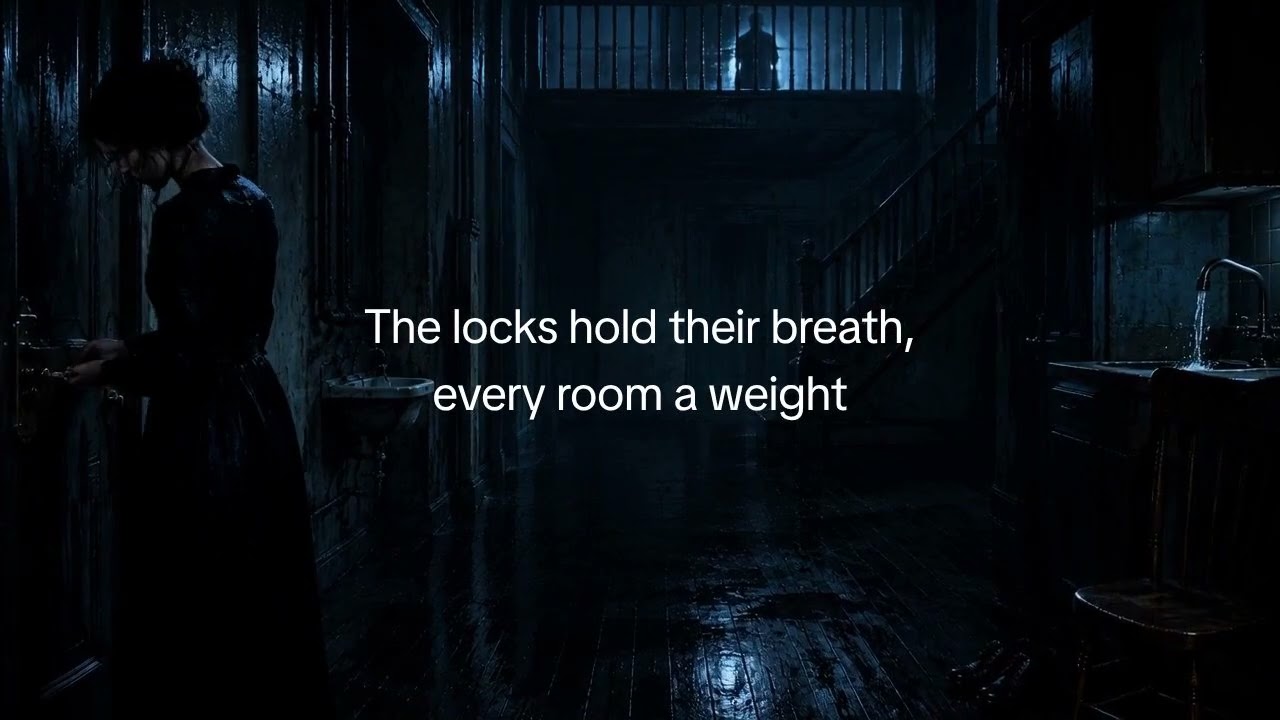
How the guilt and sleeplessness of Shakespeare’s Macbeth became a gothic darkwave piece in which an ordinary house seems to wake up around a woman who knows exactly what she has done.
WRITING THE SONG
Every Room Awake does not retell the murder of Duncan.
It begins afterward.
The inspiration comes from one of the most unsettling ideas in Macbeth: once the act has been committed, the physical evidence might be washed away, but the mind refuses to become clean.
Immediately after Duncan’s murder, Macbeth believes he hears a voice cry that he has “murdered sleep.”
Lady Macbeth insists that water can deal with the evidence.
The play spends the rest of its time proving otherwise.
That contradiction became the starting point for Every Room Awake.
Instead of leaving the story inside a medieval castle, the song places guilt inside an almost ordinary house.
A woman comes home alone.
Water runs clear.
The pipes knock.
A door that was closed seems different now.
Footsteps move across the landing upstairs.
Nothing supernatural has to be confirmed.
The important thing is that she can no longer trust an empty room to be empty.
That turns the house itself into a psychological landscape.
The kitchen knows.
The hallway waits.
The rooms seem to remember things that she would rather forget.
The central idea became the architecture of guilt: after something irreversible happens, familiar spaces stop behaving like neutral spaces. Every doorway, staircase and sound becomes evidence.
That is where the title comes from.
Every Room Awake is not necessarily describing a haunted house.
It is describing what guilt makes a house feel like.
That distinction also connects directly with Shakespeare. Macbeth’s punishment begins long before anyone defeats him. His mind starts creating consequences almost immediately: voices, sleeplessness, suspicion and the sense that what has been done can never truly be undone.
The music follows that pressure rather than staging a theatrical murder scene.
A propulsive darkwave rhythm and pacing bass figure keep the character moving through the house. Muted piano percussion, whispered layers and Vesper Mourdant’s lower-register vocal make the surroundings feel unnaturally close.
As the track develops, the layers accumulate.
Then the percussion disappears.
The footsteps do not.
The point is not whether there is really someone upstairs.
The point is that she will never again be completely certain there isn’t.
SOURCES & REFERENCES
Source status applies to the referenced material, not to the original Rhialto song.
William Shakespeare — Macbeth
Folger Shakespeare Library — Macbeth, Act 2, Scene 2
Every Room Awake, its modern-house setting, lyrics, sound design and the idea of every room becoming a witness are original Rhialto creative elements inspired by Shakespeare’s treatment of guilt.