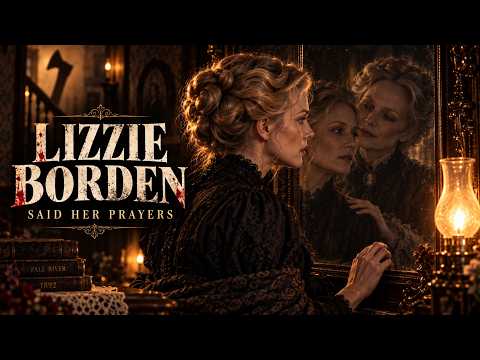
How a notorious 1892 case became a dark-country folk-horror song built around a nursery rhyme that changes meaning as it returns.
WRITING THE SONG
The song was built as dark-country folk horror rather than as a straight retelling of the Borden murders. The key idea was to let the familiar Lizzie Borden rhyme mutate inside the song: first almost comforting, then accusatory, then fully haunting.
The narrative is set before August 4, 1892. A false maternal presence sings to Lizzie and offers itself as something she can choose to accept. That keeps the historical Lizzie complicated while allowing the supernatural layer to remain openly fictional.
Musically, the target was an intimate Lux Arden performance at roughly 106 BPM: baritone guitar, a banjo pulse, foot-stomp percussion and restrained fiddle. The arrangement was designed to feel rooted in an older American ballad tradition without turning into pastiche.
SOURCES & REFERENCES
Source status applies to the referenced material, not to the original Rhialto song.
Public-domain historical sources
Reference guide
The supernatural “Mother” figure and the song’s dramatic interpretation are original fictional elements; the page does not present them as historical fact.