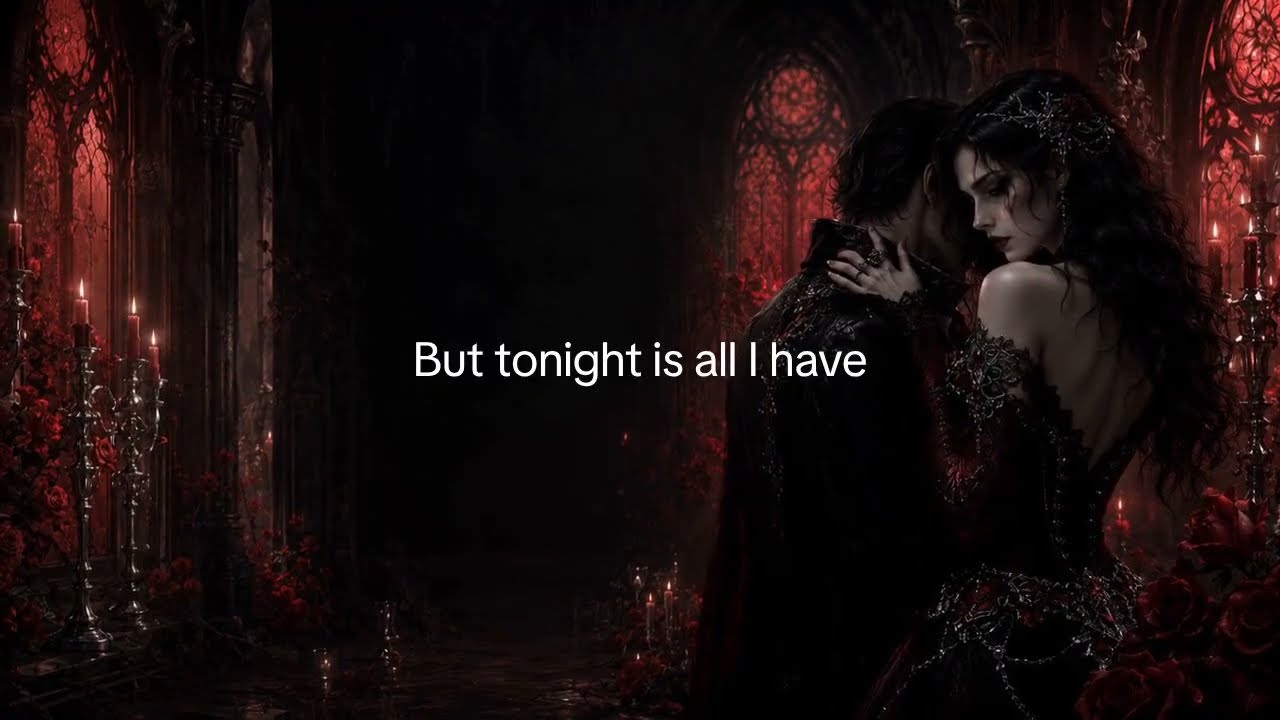
Vesper Mourdant turns the conflict between lasting love and immediate desire into a gothic darkwave power ballad where tenderness and hunger refuse to choose between each other.
WRITING THE SONG
There are two ways Vesper wants to be loved.
One asks for patience.
The other has none.
That conflict became the centre of Love Me Like a Daydream.
The music is not about choosing between two people. Vesper wants both things from the same person: the intimacy that survives morning and the desire that makes tomorrow temporarily irrelevant.
The central hook says it as directly as possible:
“Love me like a daydream
Fuck me like a nightmare.”
The daydream is tenderness.
The nightmare is hunger.
Vesper wants both.
The original idea began with a familiar emotional contradiction.
Part of you knows what you actually want.
A relationship.
Trust.
Someone who stays.
Something worth waiting for.
Then attraction enters the room and the argument becomes considerably less philosophical.
That tension became the second major hook:
“My heart says wait.
My blood says now.”
The heart is thinking about consequences.
The body is not.
Neither side is treated as false.
Vesper genuinely wants lasting love. She also genuinely wants immediate physical intimacy.
That is what makes the conflict interesting.
It would be easy to write a morality tale where patience represents wisdom and desire represents a mistake.
That is not this music.
Vesper does not want less desire.
She wants desire that does not disappear when the night is over.
The daydream side of the music represents the relationship Vesper hopes might exist.
Not perfection.
Not a fairy tale.
Something simpler.
Someone who stays.
Someone who knows what she looks like after the dramatic moment is finished.
Someone who still wants her when there is no mystery left to perform.
The daydream is therefore softer than the nightmare, but it is not innocent.
Vesper's fantasy includes intimacy.
She simply wants intimacy attached to something that lasts.
That distinction matters.
The choice is not between romance and sex.
She wants romance with sex.
Tenderness with appetite.
Safety without losing intensity.
The nightmare is where restraint disappears.
It is darker.
More physical.
More immediate.
The word nightmare would normally suggest something unwanted.
Here, Vesper asks for it.
That reversal gives the chorus its tension.
She wants the danger.
She wants the loss of control.
She wants the part of attraction that feels slightly unreasonable.
But she does not want to wake up afterward and discover that intensity was the only thing holding two people together.
The nightmare should be something they enter together.
Not something she is abandoned inside.
An important part of the concept is that the two halves do not represent two different lovers.
Vesper is not comparing the safe person with the exciting person.
She wants one person capable of being both.
That makes Love Me Like a Daydream less about choosing between competing desires than trying to reconcile them.
Can someone make you feel safe without becoming predictable?
Can desire remain dangerous without becoming destructive?
Can something be emotionally serious without becoming physically restrained?
Vesper's answer is less a conclusion than a demand:
Give me both.
Underneath the provocative chorus is a much quieter fear.
Vesper does not want to be temporary.
That changes how the title works.
The music can sound like a declaration of sexual confidence, and part of it certainly is.
But the emotional centre is the desire for continuity.
She does not want someone who only wants the nightmare.
She wants the person who remains after it.
That makes the daydream less naive than it first appears.
The fantasy is not that love will be perfect.
The fantasy is that someone might still be there tomorrow.
The production was designed as a gothic rock / darkwave power ballad at roughly 90 BPM.
It begins with restraint and gradually allows the emotional and physical tension to become larger.
The palette includes:
The vocal approach follows the emotional conflict.
The quieter passages hold something back.
The larger sections stop pretending restraint is going to win.
As the arrangement expands, the guitars and electronic elements become heavier and the cinematic layers widen around the vocal.
The music eventually feels too large for the original argument between patience and desire.
That is intentional.
By the final section, the two impulses are no longer taking turns.
They are happening simultaneously.
The visual concept gives the two emotional states different worlds.
The daydream is silver.
Moonlight.
Soft surfaces.
Cool air.
A sense that time has slowed rather than stopped.
The nightmare is crimson.
Heat.
Shadows.
Closer framing.
A world driven by appetite rather than reflection.
At first, those visual languages can appear separate.
Then they begin bleeding into each other.
Silver enters the nightmare.
Crimson enters the daydream.
That overlap reflects the actual point of the music.
Vesper cannot cleanly separate emotional love from physical desire because she does not actually want them separated.
The two worlds eventually belong to the same relationship.
Vesper Mourdant often works through suggestion, gothic imagery and ambiguity.
This chorus does something different.
“Love me like a daydream
Fuck me like a nightmare.”
There is very little room to misunderstand what she wants.
That directness is part of the character.
The surrounding verses can wrestle with consequences, patience and vulnerability.
The chorus strips the argument down to instinct.
Soft enough to stay.
Dangerous enough to matter.
That contrast is the music.
The easiest reading of Love Me Like a Daydream is romance versus lust.
The deeper conflict is slightly different.
It is the fear that people are often told they must sacrifice one kind of intimacy to secure the other.
Choose stability and lose excitement.
Choose excitement and lose stability.
Vesper rejects the premise.
Her problem is not that she cannot decide which one she wants.
Her problem is that she wants both badly enough to refuse the compromise.
That is why:
“My heart says wait.
My blood says now.”
does not end with either side winning.
The goal is not victory.
The goal is finding someone for whom the argument no longer needs to exist.
A daydream is something beautiful partly because you know it might not be real.
A nightmare feels real even when it isn't.
The title puts Vesper between those two experiences.
She wants the tenderness people fantasize about.
She wants the intensity people sometimes fear.
And she wants both to survive contact with reality.
That is the darker hope underneath the music.
Not merely:
Want me.
But:
Want me intensely enough tonight—and genuinely enough to still be here tomorrow.
SOURCES & REFERENCES
Source status applies to the referenced material, not to the original Rhialto song.
Love Me Like a Daydream is an original Rhialto concept.
It is not an adaptation of a specific literary or public-domain work.
The creative starting point was the emotional contradiction between waiting for a fulfilling relationship and experiencing immediate physical desire, developed through the opposing images of the daydream and the nightmare.
Source status: Reference Sources Only