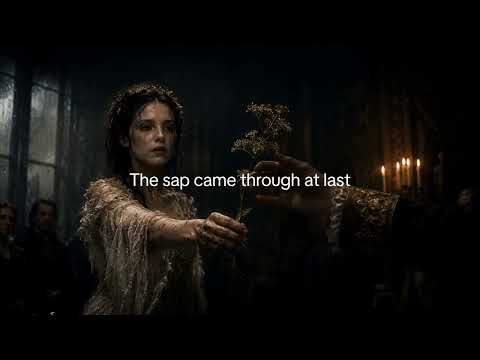
How Ophelia’s flower scene in Hamlet became a fractured gothic waltz about accusation, performance and a mind slipping out of alignment.
WRITING THE SONG
The song begins with Ophelia’s flower-distribution scene in Hamlet, but the goal was not to retell the play or simply dramatize her death. The central idea was that her apparently disordered speech can also be heard as precise accusation: each flower is chosen, handed over and allowed to carry meaning that direct speech cannot.
The writing kept the ambiguity intact. Ophelia may be genuinely coming apart, strategically performing madness, or doing both at once. Revisions shortened the middle of the song, sharpened the chorus and introduced controlled verbal fractures so the language itself begins to lose stability. One unnamed flower is kept back, deliberately unresolved.
The musical treatment became an unstable gothic darkwave waltz in 3/4 at about 118 BPM, with prepared or plucked piano, hard sub-bass interruptions, snapped-stem percussion, bowed strings and fractured vocal layers. The ending hints at water without resolving the song into a simple death scene.
SOURCES & REFERENCES
Source status applies to the referenced material, not to the original Rhialto song.
Public-domain literary source
The song focuses especially on Ophelia’s flower-distribution scene in Act IV, Scene 5. The Rhialto lyrics, arrangement and interpretation are original rather than an adaptation of any modern edition or performance.