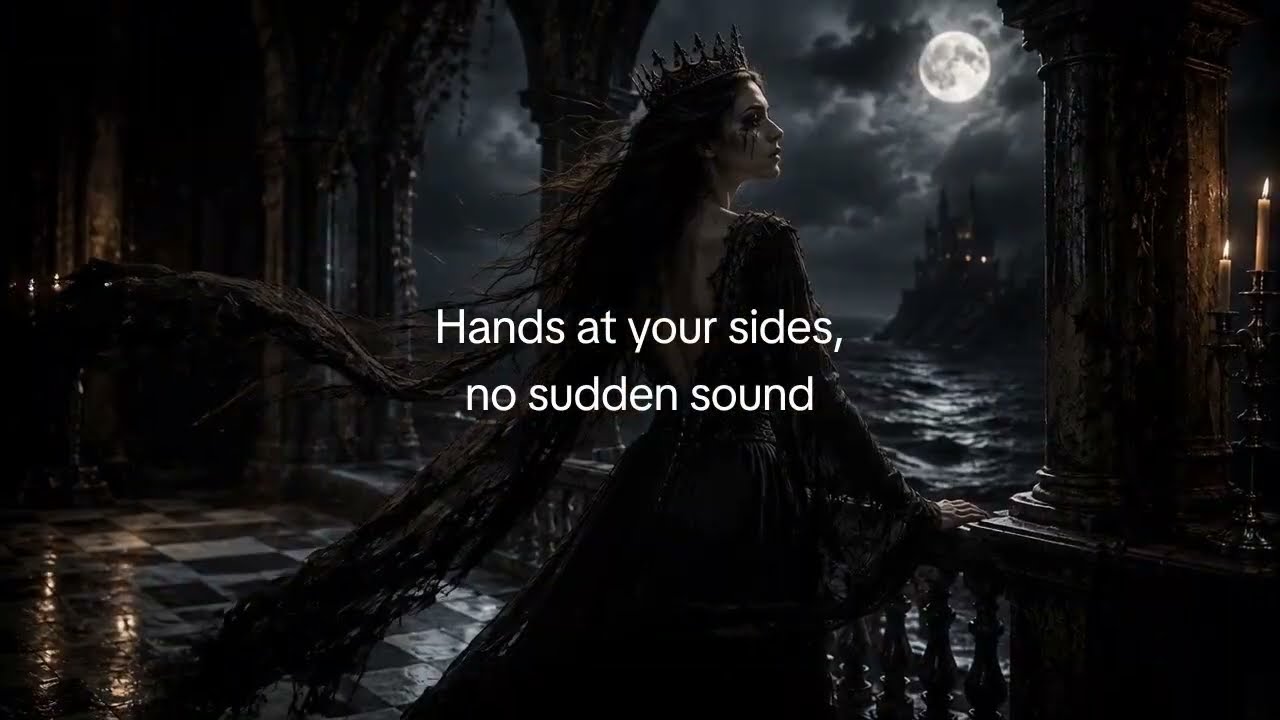
How Hermione’s impossible return in Shakespeare’s The Winter’s Tale became a gothic art-rock piece about a woman coming back from apparent death — and everyone around her assuming that her return means forgiveness.
WRITING THE SONG
Near the end of The Winter’s Tale, Shakespeare creates one of his strangest scenes.
Hermione has been believed dead for years.
Then Paulina brings Leontes, Perdita and the others to see what appears to be a statue of her.
They look at it.
They remember her.
And then the statue moves.
For The Statue Breathes, the most interesting question was not whether the scene is literally miraculous.
It was: what does everyone expect Hermione to do once she returns?
The people around her immediately want the moment to mean something reassuring.
Restoration.
Reunion.
Forgiveness.
A terrible history finally made whole.
But Hermione’s return does not necessarily belong to them.
That became the central tension of the song.
The room begins by treating her as an object.
A likeness.
Stone.
A memorial.
Something to be observed.
Then there is a small change.
Breath disturbs the dust.
A hand warms.
Fabric moves.
And suddenly the thing everyone has been looking at becomes a woman again.
The central hook grew from that moment: The statue breathes. Does that mean she forgives you?
The question matters because returning is not the same thing as absolving.
Hermione has survived accusation, imprisonment, the apparent loss of her children and years in which everyone else has been allowed to construct a story about what happened to her.
Now they want to construct the meaning of her return too.
The song resists that.
In the original writing concept, the first part of the track deliberately uses the language of objects — statue, stone, likeness, figure.
As Hermione becomes physically present, the language changes.
She.
Her.
I.
My name.
My body.
My return.
That shift lets the song move from people observing Hermione to Hermione reclaiming ownership of the scene.
One image was deliberately left unresolved: there is dust everywhere except beneath Hermione’s feet.
The song never explains it.
Maybe she has moved before.
Maybe the entire unveiling has been carefully staged.
Maybe she was never a statue.
Maybe someone prepared the floor.
Or perhaps the witnesses simply see what they need to see.
That ambiguity matters because Shakespeare himself never gives the scene a neat mechanical explanation.
The music follows the same progression.
It begins almost ceremonially: low piano, measured percussion and the feeling of footsteps inside a room where everyone has been told not to move.
As Hermione comes alive, the arrangement gains bass, distortion and physical weight.
But it deliberately avoids turning into triumphant resurrection music.
The largest emotional release comes not when the statue moves, but when Hermione refuses the meaning everyone else wants to assign to that movement.
She has returned.
That does not mean the past has disappeared.
And it does not mean she owes anyone forgiveness.
SOURCES & REFERENCES
Source status applies to the referenced material, not to the original Rhialto song.
William Shakespeare — The Winter’s Tale
Folger Shakespeare Library — The Winter’s Tale, Act 5, Scene 3
The Statue Breathes, its Hermione-centred perspective, dust imagery, lyrics, arrangement and interpretation of return versus forgiveness are original Rhialto creative elements.