How the farewell ritual of Auld Lang Syne became a gothic Halloween anthem built around a simple reversal: what if October 31 were New Year’s Eve for monsters?
WRITING THE SONG
The idea behind Till Halloween started with the emotional function of Auld Lang Syne rather than simply its familiar melody.
Auld Lang Syne is a song about looking backward, remembering old companions and marking the end of one period before another begins. That ritual is now inseparable from New Year’s Eve.
The question was what would happen if that tradition belonged to Halloween instead.
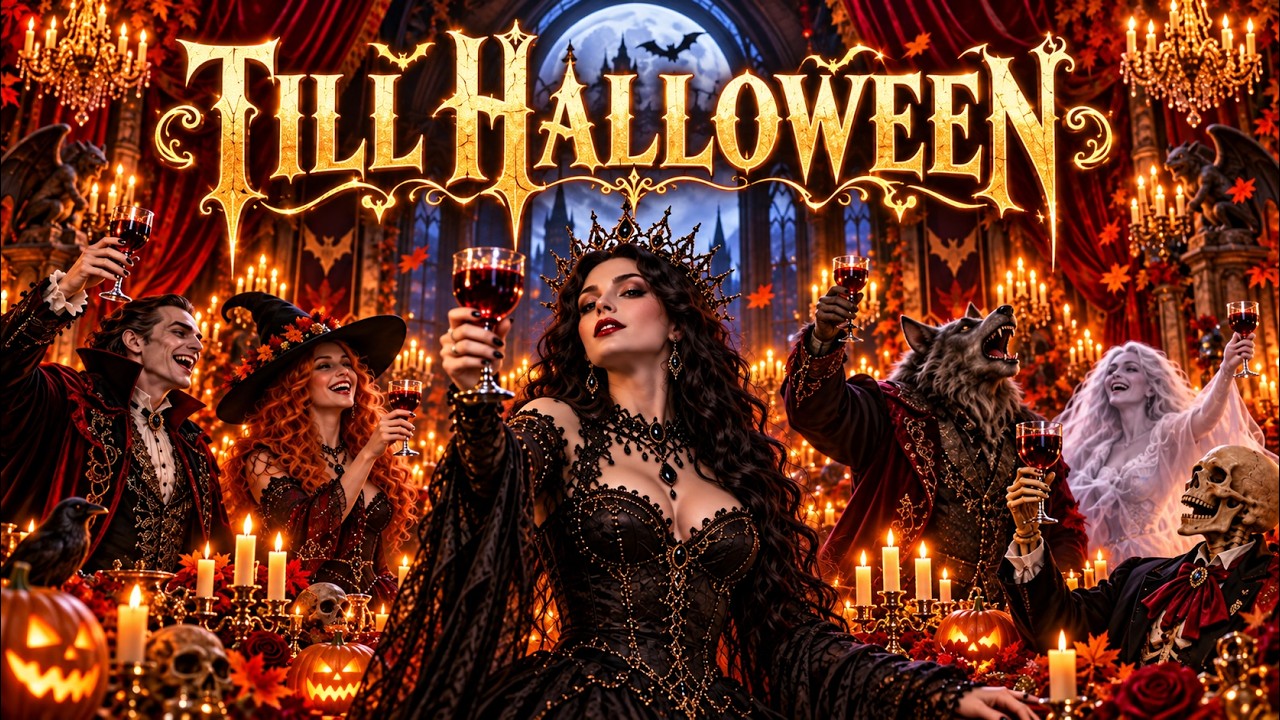
In the world of Till Halloween, October 31 is not merely one frightening night. It is the great annual reunion: the night when crypts open, old carriages arrive and creatures that have been apart for a year gather again.
In other words, Halloween becomes New Year’s Eve for monsters.
That gave the music a mixture of celebration and melancholy that was more interesting than writing another straightforward scary Halloween track. The characters are frightening, but they are also returning to old friends. The night has history. Some of these creatures have been meeting this way for centuries.
The underlying Auld Lang Syne idea therefore works on two levels. Its familiarity gives the listener the feeling of an old communal ritual, while moving that ritual to Halloween turns something warm and nostalgic into something slightly uncanny.
The title Till Halloween also shifts the emotional focus away from New Year’s Eve. The characters are not waiting for January. Their calendar revolves around October 31. Everything leads toward the night when they can gather again.
Musically, the arrangement pushes that idea into gothic Halloween music rather than trying to reproduce a traditional Scottish performance. Dark electronic production, theatrical vocals and Vesper Mourdant’s gothic identity transform the source inspiration into something designed for a midnight Halloween gathering rather than a Hogmanay celebration.
The result is less a cover of Auld Lang Syne than a new piece built around the cultural idea behind it: old acquaintances meeting again at the end of a cycle.
Only this time, some of the acquaintances are dead.
SOURCES & REFERENCES
Source status applies to the referenced material, not to the original Rhialto song.
Traditional and Robert Burns source
Historical reference
Till Halloween, its Halloween setting, lyrics, production and the concept of October 31 as a New Year’s Eve-style reunion for supernatural characters are original Rhialto creative elements.